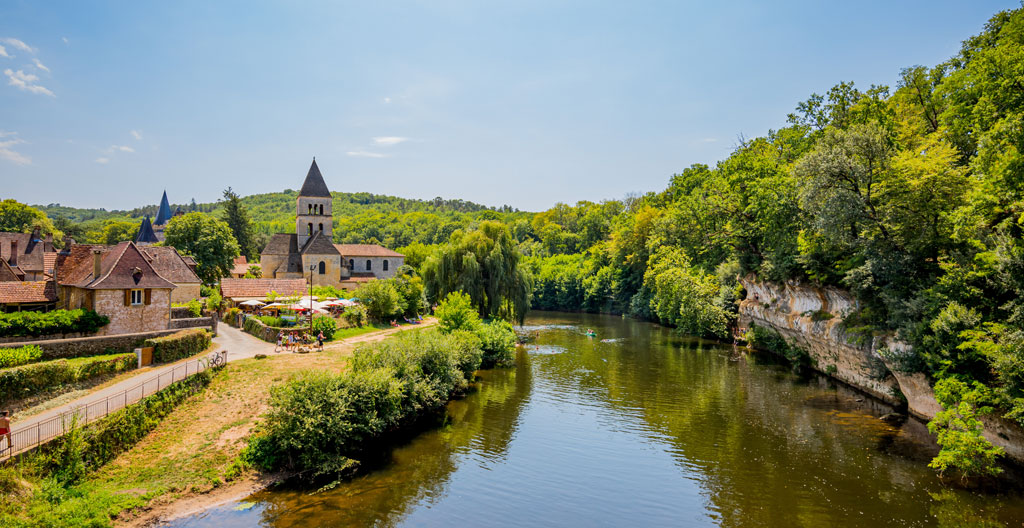
While Paris prices push serious buyers toward the obvious alternatives — Bordeaux, Provence, the Dordogne — a much quieter region has been quietly holding some of France’s most compelling property opportunities. Limousin, straddling the northern Massif Central, carries a price-to-character ratio that experienced buyers describe as increasingly rare. What explains this gap between the region’s objective qualities and its market profile? The answer lies in a combination of structural factors that most overviews never bother to examine.
Three things to understand before reading further:
- Limousin’s property prices remain structurally lower than comparable French rural markets — not because of lack of quality, but because of persistent low visibility.
- The wider national market recorded a 7 % drop in transaction volumes year-on-year (April 2025), which reinforces the negotiating position of serious buyers in undersupplied niche regions.
- Acquiring in this region involves mandatory diagnostic documentation governed by French law — understanding these obligations protects both buyer and seller throughout the process.
The price gap that the market hasn’t corrected
France’s rural property market in 2025 is navigating a contraction. the Notaires-INSEE 2025 report confirms that transaction volumes in the existing-property segment fell by 7 % year-on-year in April 2025, while prices across most regions held broadly stable. For the Limousin — Corrèze, Creuse and Haute-Vienne combined — this national contraction arrives on top of an already thin transaction volume, which structurally favours buyers with a clear brief and the right local contacts.
The price differential between Limousin and its better-known neighbours is not marginal. Stone properties with land — the category that attracts buyers seeking character over comfort-box uniformity — command a premium in Dordogne, Lot and the Périgord Noir that rarely exists here. A comparable farmhouse with several hectares and outbuildings sits at a fraction of the price that the same profile of property would fetch two departments south. This gap has persisted for years without a correction, which is precisely what makes it interesting: it is structural, not cyclical.
Several buyers who have relocated from Paris or the UK describe the same discovery curve — they entered searches expecting to compromise on either quality or acreage, and found neither was necessary. Among the properties for sale in Limousin currently available, the range spans village houses to working domains with multiple stone dependencies, a breadth of stock that coastal and Provençal equivalents simply cannot match at these price levels.
7%
Drop in existing-property transaction volumes across France, year-on-year (April 2025) — creating a buyer’s market in niche rural regions
The broader stability in pricing noted by the Notaires-INSEE analysis is relevant here for a specific reason: it tells buyers that Limousin values are not inflating rapidly under speculative pressure, but also not softening under distress. The market sits at a rational equilibrium — one that rewards decisive buyers over hesitant ones.
What the land and the stone actually deliver?
The physical character of Limousin property is distinct from almost anywhere else in France. The building tradition relies on granite and local limestone, producing walls of genuine thermal mass that perform differently from rendered-brick constructions of the Loire Valley or the plaster-and-tile vernacular of the Mediterranean south. A Limousin stone farmhouse typically carries walls between 60 and 80 centimetres thick — a construction standard that translates directly into energy performance once modernised, and an aesthetic permanence that new-build volumes cannot replicate.
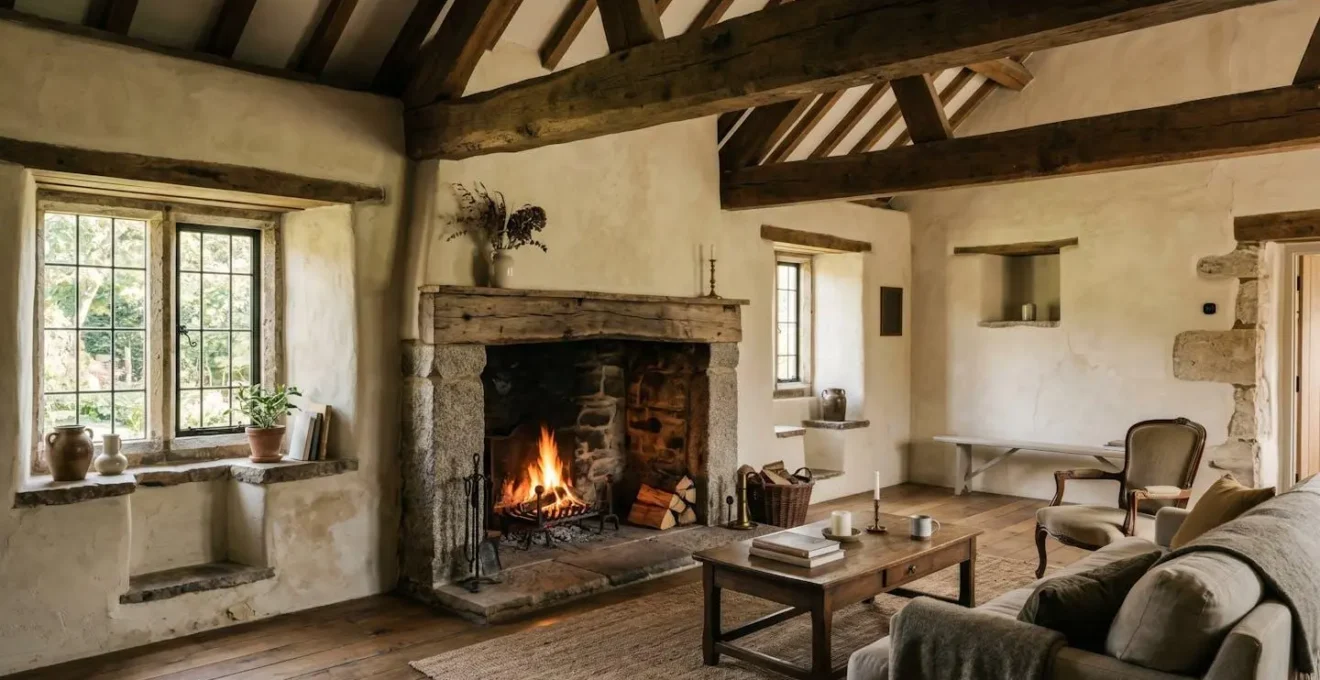
Beyond the construction itself, the relationship between the property and its land is qualitatively different from what peri-urban markets offer. Rural domains with terrain in the Creuse or Corrèze regularly include woodland, orchards, streams and meadows as integral components — not ornamental additions. For families who have spent years weighing the compromise between liveable outdoor space and acceptable commute distances, this reconfigures the entire calculation.
Consider a scenario that surfaces repeatedly in the buyer journey: a couple relocating from a major urban centre, with older children and a budget that would secure a modest apartment in Paris’s inner suburbs. In the Limousin, the same budget unlocks a stone longère of 200 square metres with three or four hectares, outbuildings capable of conversion, and a fibre internet connection installed under recent rural broadband rollout programmes. The quality-of-life shift is immediate and measurable — and the property’s intrinsic value rests on assets that do not depreciate: land, stone and structural integrity.
It is worth addressing directly the objection about services and amenities. The region’s two principal cities — Limoges and Brive-la-Gaillarde — provide hospital infrastructure, secondary schooling, rail connections and commercial centres fully comparable to mid-sized French cities. The rural communes between them are not isolated: they are quiet. The distinction matters, because it separates buyers who have visited from those relying on secondhand impressions. Understanding the particularities of luxury real estate in rural France means factoring in exactly this kind of ground-truth assessment rather than surface comparisons with more publicised regions.
Case study: Corrèze longère acquisition
A classic configuration in current Limousin transactions involves a property of 180 to 220 square metres on two to five hectares, with at least one stone barn or dependency in structurally sound condition. The buyer profile is typically a family or couple aged 40–55, relocating from a larger city, with a renovation budget allocated alongside the purchase price. The friction point in these dossiers is rarely price negotiation — it is diagnostic completion and the timeline for satisfying the mandatory technical file. Buyers who arrive with a specialist adviser conversant in French property law consistently close faster and encounter fewer post-signature complications than those navigating the process independently.
Navigating the legal and diagnostic framework
Any property acquisition in France — regardless of region — is governed by a mandatory technical documentation package that the seller must assemble before signature. This is not a Limousin-specific requirement, but it carries particular weight in rural transactions involving older stone buildings, where the age and condition of installations make thorough diagnostic work especially consequential.
The Dossier de Diagnostic Technique (DDT) sits at the centre of this framework. As the ADIL’s 2026 guidance on mandatory purchase diagnostics specifies, the État des Risques et Pollutions (ERP) must be provided by the seller as a component of this file. The ERP must be no more than six months old at the point of signature — a timeline that sometimes requires renewal if negotiations extend beyond that window, a scenario that occurs more often than buyers anticipate in rural markets where transaction timelines tend to be longer than urban norms.
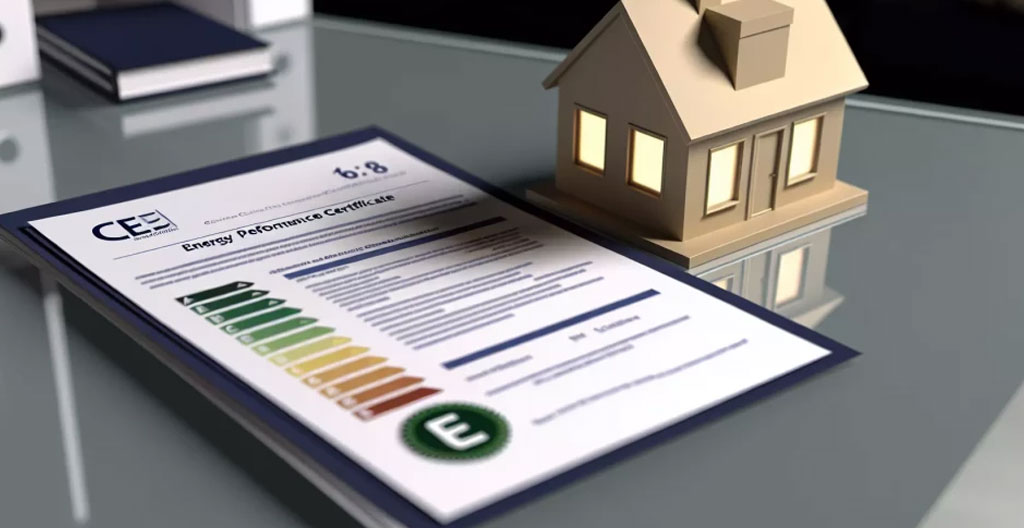
The scope of the DDT extends beyond the ERP. It encompasses the Diagnostic de Performance Énergétique (DPE), lead exposure assessments for pre-1949 construction (which covers a substantial proportion of Limousin stone buildings), asbestos screening for buildings completed before July 1997, electrical and gas installation audits, and — where applicable — termite and natural risk assessments. the 2025 regulatory update published in the Journal Officiel reinforces the obligation to inform the acquirer on natural and technological risks, and specifies that the absence of a compliant DDT at the point of sale can lead to the transaction being declared null and void.
DDT compliance note: For stone properties built before 1949 — a category that includes a large share of Limousin farmhouses and manors — the lead paint assessment (CREP) is mandatory. In renovation projects where walls are to be stripped or structural work is planned, this diagnostic informs the methodology and safety protocols for the works, not merely the legal file.
On the practical side, buyers who have handled French property acquisitions describe the diagnostic phase as the most unpredictable in terms of timeline. A single missing or expired document can halt notarial proceedings. The market practice is to request a complete DDT file at the pre-offer stage, review it before committing to a timeline, and factor any renewal costs into the negotiation. Sellers with an up-to-date file have a measurable advantage in concluding transactions efficiently — an argument, incidentally, for preparing this documentation proactively rather than reactively once an offer arrives.
Understanding how a well-secured property positions itself in negotiations is important here: properties with a complete, up-to-date diagnostic file managed by an organised agency tend to move from offer to compromis de vente significantly faster than those where documentation is assembled ad hoc after the offer is accepted.
Your next steps before making an offer
Approaching a Limousin acquisition without a structured pre-offer framework produces exactly the kind of friction that delays — or derails — transactions. The properties that represent genuine value in this market move on the basis of informed decisiveness, not protracted comparison shopping. The following steps reflect what experienced buyers in this specific market segment consistently prioritise.
- Define your non-negotiable criteria (surface, land area, outbuildings, proximity to a town with secondary schooling or medical infrastructure)
- Request the complete DDT file from the seller or agency before any site visit, and verify the ERP date — if it is more than four months old, factor renewal into your timeline
- Identify a notaire familiar with rural Corrèze or Creuse transactions — the administrative specifics of agricultural land classification and right-of-way registrations differ from urban conveyancing
- Budget separately for the diagnostic file, notarial fees (typically 7–8 % of purchase price for existing properties in France) and any immediate structural survey you commission independently
- Plan at least two visits — one functional (access routes, broadband quality, proximity to amenities) and one structural (roof, drainage, heating system condition) — before committing to a compromis
The Limousin market rewards preparation. Its relative quietness compared to Provence or the Atlantic coast means that the buyers who arrive with clarity on their criteria and their financing rarely face competitive bidding — but they do need to act on well-priced properties without extended deliberation, because the inventory of genuinely characterful stone buildings is finite and does not self-replenish.